SE HABLA ESPAÑOL





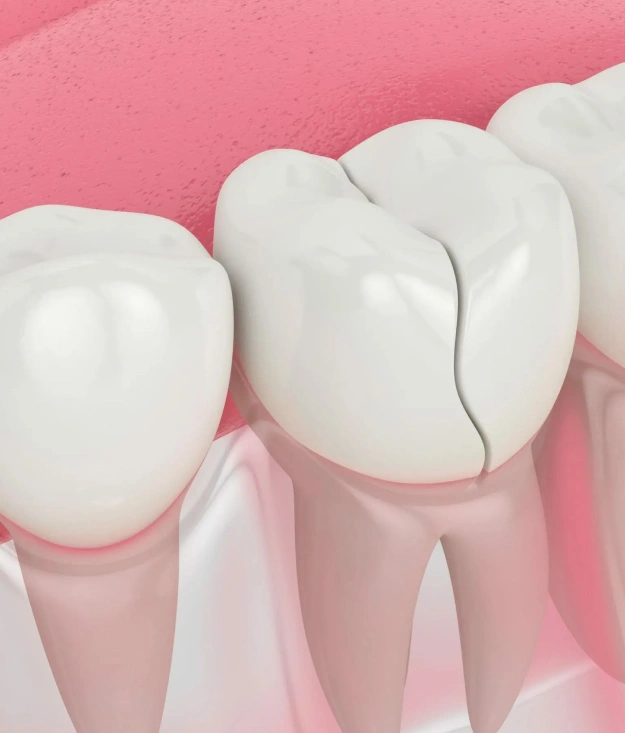
Restoring Strength to Cracked Teeth
Cracked and fractured teeth are common dental problems. With advancements in dental technology allowing people to keep their natural teeth for longer periods, the risk of cracked teeth also increases. Various factors such as biting on hard objects, trauma, grinding, and clenching of teeth can lead to teeth cracking. These behaviors put extra strain on the teeth, making them more prone to fractures.
When tooth enamel is cracked, it can cause temporary debilitating pain. If there is no pressure on the crack, there may be no discomfort. However, when the cracked tooth is used for biting, the crack can widen, exposing the pulp and causing painful irritation. When the pressure is released, the crack fuses back together and the pain subsides. If left untreated, the pulp can become irreversibly damaged and constantly painful, leading to a pulp infection that can affect the surrounding bone and soft tissue.
Signs of a cracked tooth can include
Experiencing unexplained pain while eating, sensitivity to both warm and cold foods, and pain without a clear cause. Finding it challenging to identify the exact location of the discomfort.
What types of cracks can impact the teeth?
There are various causes of tooth cracks, and the type of crack will dictate the appropriate treatment. If the crack is shallow, root canal therapy may be an option to save the natural tooth. However, in more severe cases where the damage is extensive, extraction may be necessary.
Below is a quick summary of the most frequently seen crack types:
Crazes
These small vertical cracks on the surface of the teeth are typically harmless and do not pose a risk to the teeth. Most dentists view these scratches as a natural part of tooth anatomy. While craze lines usually do not require treatment for health reasons, there are many cosmetic procedures available to minimize their visual impact.
Cracks above the gum line
These cracks only impact the top part of the tooth and do not reach below the gum line. Typically, the damaged portion of the tooth will eventually break off. There is usually minimal pain involved, as the tooth pulp, which contains the nerves and blood vessels, remains unharmed.
Cracks below the gumline
These cracks can extend below the gum line and sometimes even into the jawbone. If a piece breaks off, it typically stays connected until a dentist removes it. Painful oblique subgingival cracks may need both periodontal surgery to expose the crown and endodontic treatment to place a crown or other restoration.
Cracks that run vertically
These cracks develop when the roots of the tooth become separated, typically affecting the nerve. Fortunately, with root canal therapy and a crown, the tooth can often be saved as it usually does not completely separate.
Cracks in the roots that are at an angle
These cracks typically do not impact the surface of the tooth. The damage is usually only visible below the gum line and often below the jawbone. Depending on the proximity of the fracture to the tooth surface, root canal therapy may be an option. However, extraction is typically the only solution for this type of fracture.
Cracks in the vertical apical root
These cracks typically form at the tip of the root, known as the apex. While the tooth may not necessarily need to be extracted by a dentist, many patients opt for extraction due to the intense pain they experience. Although root canal therapy can provide temporary relief, teeth with these cracks often end up being extracted in the long run.
What is the treatment for cracks in the teeth?
There are various types of cracked teeth, some of which can only be detected through X-ray machines, while others are visible to the naked eye. When the tooth root is affected, root canal therapy is the recommended treatment. This involves removing the pulp, nerves, and vessels of the tooth and filling the space with gutta-percha. A crown or filling will then be placed to stabilize the tooth, allowing it to function normally.
If the crack in the tooth is too severe to be saved, the dentist will need to perform an extraction. In such cases, there are several restorative options available, including bridges, dental implants, and partial dentures. These structures can help restore normal biting, chewing, and speaking functions.